Showing posts with label Millville. Show all posts

Monday, August 31, 2026

How Roller Skating Captivated Redding

How roller skating captivated Redding
Originally Appeared On A News Cafe


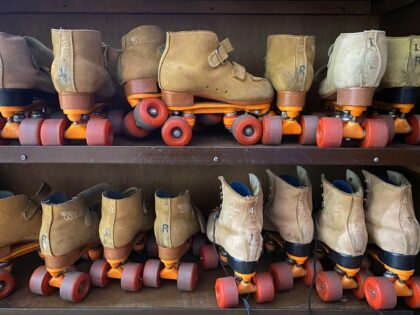
Photo by Laura Rivera on Unsplash


(Editor’s note: Please welcome to A News Cafe Jeremy Tuggle and his local history column, Tuggle Tales: Unearthing the People, Places, and Stories of Shasta County—Past and Present. )

Skating has a long and fascinating history stretching back thousands of years. The earliest form—ice skating—dates to between 3000 and 4000 B.C., when people in Northern Europe fashioned skates from animal bones to travel across frozen lakes and rivers. Nearly five millennia later, in 1760, the invention of the first roller skates created an entirely new way to glide.

By the early 1880s, roller skating had become one of America’s greatest recreational crazes. Across the western United States, the sound of steel wheels rattling across polished wooden floors echoed through newly opened skating rinks. These lively venues became gathering places where families, young couples, and friends met to socialize, exercise, and enjoy an evening’s entertainment.

Even Redding felt the pull of the new craze. On April 5, 1884, the Republican Free Press lamented the town’s lack of a skating rink: “Our town has been surpassed for once. We have no skating rink. But it is the universal opinion that the roller skate is a wayward little quadruped. It is as frolicsome and more innocent looking than a lamb; but for lowering one’s upright attitude in the community, it is unsurpassed.”
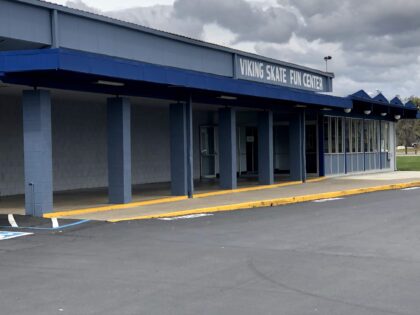


Viking Skate Country in Redding, California, which opened in 1974 and continues a roller-skating tradition in the city dating back to the 1880s. Photograph taken by Jeremy M. Tuggle in 2024.

Ironically, before Redding established its first rink, the neighboring communities of Millville and Igo had already embraced the sport, demonstrating that even small frontier settlements were eager participants in one of the era’s most fashionable recreations.

Plans for Redding’s own rink soon emerged. On April 11, 1885, the Republican Free Press reported that local businessman John George had moved the Chappell & Houston warehouse to the corner of Yuba and California streets, adjacent to the railroad reserve. Curious residents speculated about its purpose, prompting the newspaper to joke: “Some say that the building will be used for a skating rink, others say for a hall. If you are very curious, go ask John.”

Three weeks later, the mystery was solved. On May 2, 1885, Charley George opened Redding’s first skating rink, known as St. George Hall. Predicting great success, the Republican Free Press declared that “roller skating will be the rage for some time to come.” The editor also noted that many young women were quietly practicing before making their public debut, hoping their first appearance would be graceful rather than awkward. To celebrate the occasion, the newspaper published a lighthearted poem:

Roll on, roll on, ye roller skates
Roll on ye ankles, trim and neat;
Roll on ye limbs of purple hose;
Be careful; do not turn up your toes,
Be sure and not roll on your nose.

The prediction proved remarkably accurate. Roller skating quickly became one of Redding’s favorite pastimes, and St. George Hall evolved into a bustling social center where residents gathered as much for conversation and companionship as for exercise. Competition soon followed. In 1887, James Meads opened a second rink inside the Major Opera House on California Street. Although short-lived, it reflected skating’s growing popularity.

By 1889, St. George Hall was under the management of N. B. Howard and continued serving skaters until disaster struck. During the severe snowstorm of January 1894, approximately eighteen inches of snow blanketed Redding, causing the skating rink to collapse beneath the weight. Several other buildings were also damaged or destroyed during the storm, and St. George Hall was never rebuilt.

A decade later, skating returned to Redding. In late October 1904, Redding resident and local hostelry man Thomas Cordi opened a new rink inside the Bush Building on Market Street, formerly occupied by the store of James Young Hardware. Within two years, roller skating had once again swept through Redding. By the autumn of 1906, the Courier-Free Press newspaper of Redding reported that skating had become far beyond a simple pastime—it was the city’s latest social phenomenon. Children, teenagers, businessmen, and adults of every age flocked to the rinks.

At the center of the excitement stood the skating rink inside Armory Hall, built in 1889 on the site now occupied by Shasta Regional Medical Center. There, a newly organized skating club of twenty-five couples held its inaugural meeting. Some members skated with confidence while others struggled through their first uncertain laps, often providing as much entertainment for spectators as the accomplished skaters.

The club elected A. H. Tucker as president, Dr. B.F. Saylor as secretary, and Dr. Potter as treasurer. Every Wednesday evening from 10 p.m. until midnight, the rink was reserved exclusively for club members to practice, socialize, and perfect new skating maneuvers.
When theatrical performances or other events occupied Armory Hall, members gathered elsewhere for card parties and social evenings. No matter where they met, however, conversation invariably returned to skating. One newspaper account told of an enthusiastic but less-than-graceful club member who attempted to demonstrate the advanced “double eagle” maneuver while explaining the importance of balance. His short legs flew into the air, his arms flailed wildly, and he landed flat on the floor.

After nearly eleven seconds, he finally gasped, “Whoof.” Recovering his composure, he sheepishly apologized to a nearby young woman. “Er—I beg your pardon.” “Oh, don’t mention it,” she replied. The pair quietly rejoined the crowd as though nothing unusual had happened.

Such scenes were common at Armory Hall, where beginners and experienced skaters shared the floor with equal enthusiasm and good humor. The Courier-Free Press newspaper jokingly declared that the rink had transformed “one-half of Redding’s population into rolling stock.” The customary greeting on city streets was no longer “How are you?” but “Do you skate?”

The skating craze even reshaped Redding’s social life. Many young women preferred evenings at the rink over dances, theater performances, or buggy rides, claiming they simply could not miss another opportunity to perfect their skating technique. The article concluded that roller skating had become much more than entertainment—nearly everyone had caught what it called the “skating habit.” Armory Hall remained one of Redding’s principal skating venues until it was destroyed by fire in January 1915.

The following year, in 1916, G. M. Klein established a transportable roller skating rink at the corner of Pine and Yuba Streets. Unlike the permanent skating halls that had come before it, Klein’s portable rink could be relocated and adapted as needed, marking a new phase in Redding’s skating culture. Roller skating remained a popular pastime throughout the 1920s and into the 1930s. In February 1928, a new skating rink was constructed at the corner of Tehama and Pine Streets, demonstrating that the pastime remained popular as Redding entered the 1930s. By 1940, another roller skating rink had opened at the corner of East and Yuba Streets, but its existence was brief. On December 2, 1940, the building was destroyed by fire, bringing an abrupt end to one of Redding’s last pre-war skating rinks.

Roller skating experienced a major resurgence following World War II. On October 30, 1947, the Coliseum Skating Rink opened to a large crowd two miles south of Redding on Highway 99. Owned by Troy Jones and W. S. Blazer, the $75,000 facility was promoted as the largest skating rink between San Francisco and Portland, Oregon.

The building measured 70 by 160 feet and contained more than 11,000 square feet of skating floor. Its innovative “spring floor,” constructed of laminated 2×4 framing topped with felt and hardwood maple, provided a smoother skating surface and reduced impact for skaters. The Coliseum accommodated 600 skaters and featured parking for up to 3,000 automobiles on a nine-acre site. Modern lighting illuminated the rink, and plans included a check room, soda fountain, balcony, and installation of a Hammond electric organ.

Open seven days a week, the rink offered afternoon sessions from 2 to 5 p.m. and evening skating from 7 to 11:45 p.m. Beyond skating, the Coliseum was designed as a full entertainment center, hosting dances with name bands, boxing matches, wrestling events, and community gatherings.

The owners of the rink even collaborated with Redding City Lines, a local bus system that offered transportation from Market and Yuba Streets to the skating rink and return trips as well. More than two decades later, history repeated itself, as the Coliseum Skating Rink became one of several Redding-area structures impacted by the devastating December 1968 snowstorm. On December 23, 1968, the storm dumped 16 inches of snow in a single day, setting the all-time calendar-day snowfall record for Redding. Then, on December 24, 1968, an additional 4 inches fell, bringing the storm’s total to 20 inches.
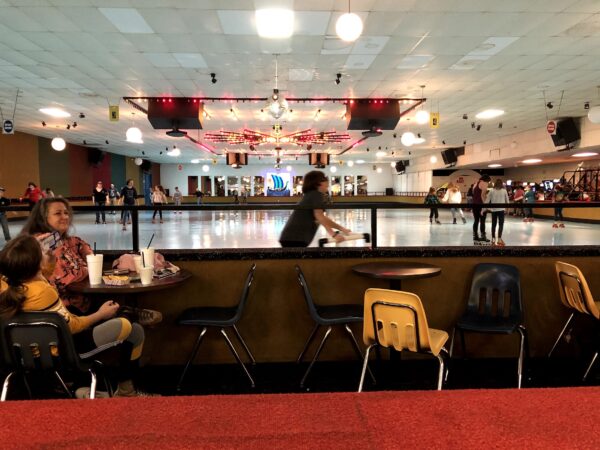


Inside Viking Skate Country in Redding, California, where generations of local residents have gathered to roller skate since the rink opened in 1974. Photograph taken by Jeremy M. Tuggle in 2024.

During what local officials described as the “Big Snow,” heavy, wet snowfall caused widespread structural failures across the region. The Coliseum Skating Rink suffered significant structural damage under the weight of the snow, marking a turning point for aging mid-century recreational facilities.

Finally, in 1974, former state senator Maurice Johannessen opened Viking Skate Country, which became the city’s premier modern skating rink. His wife, Marianne Johannessen, continues to serve as general manager, maintaining a direct link to more than a century of skating history in Redding.

Looking back more than a century later, what began with a single skating rink in 1885 grew into one of Redding’s defining social pastimes. From St. George Hall to Armory Hall, from the Coliseum Skating Rink to Viking Skate Country, roller skating remained a constant thread through generations of community life. Long before movies, radio, and modern entertainment defined leisure, skating rinks brought neighbors together beneath glowing lights—where friendships formed, romances began, and entire evenings were spent simply rolling in circles, sharing in a pastime that left lasting marks on the city’s history.


Resources:

The Free Press newspaper of Redding, December 1, 1883

The Republican Free Press newspaper of Redding, April 5, 1884

The Republican Free Press newspaper of Redding, December 13, 1884

The Republican Free Press newspaper of Redding, January 10, 1885

The Republican Free Press newspaper of Redding, February 7, 1885

The Republican Free Press newspaper of Redding, April 11, 1885

The Republican Free Press newspaper of Redding, May 2, 1885

The Republican Free Press newspaper of Redding, June 6, 1885

Skating Carnival - The Republican Free Press newspaper of Redding, July 11, 1885

The Republican Free Press newspaper of Redding, October 31, 1885

The Republican Free Press newspaper of Redding, November 28, 1885

The Republican Free Press newspaper of Redding, December 12, 1885

The Republican Free Press newspaper of Redding, January 2, 1886

The Republican Free Press newspaper of Redding, August 14, 1886

The Republican Free Press newspaper of Redding, February 12, 1887

The Republican Free Press newspaper of Redding, October 29, 1887

The Republican Free Press newspaper of Redding, December 10, 1887

The Republican Free Press newspaper of Redding, March 3, 1888

The Republican Free Press newspaper of Redding, August 4, 1888

The Republican Free Press newspaper of Redding, November 16, 1889

The Republican Free Press newspaper of Redding, November 23, 1889

The Republican Free Press newspaper of Redding, January 27, 1894

To Start a Skating Rink - The Republican Free Press newspaper of Redding, October 20, 1905

Roller Skating Rink - The Republican Free Press newspaper of Redding, October 23, 1905

The Northern California Rink Association - The Free Press newspaper of Redding, February 5, 1906

A Grand Event - The Free Press newspaper of Redding, February 6, 1906

Skating at the Armory - The Free Press newspaper of Redding, February 16, 1906

Whist And Skating in Contest for Popularity - The Free Press newspaper of Redding, February 20, 1906

The Free Press newspaper of Redding, February 21, 1906

Broke Her Arm - The Free Press newspaper of Redding, February 26, 1906

Roller Skating Is All the Rage - The Courier-Free Press newspaper of Redding, March 5, 1906

Polo on Skates at the Armory - The Courier-Free Press newspaper of Redding, March 26, 1906

The Courier-Free Press newspaper of Redding, April 11, 1906

Armory Hall Has Been Leased for Year - The Courier-Free Press newspaper of Redding, June 14, 1906

Skating Rink to Open Soon - The Courier-Free Press newspaper of Redding, September 13, 1906

The Searchlight newspaper of Redding, October 2, 1906

The Skating Rink - The Courier-Free Press newspaper of Redding, October 19, 1906

Boy Breaks an Arm - The Courier-Free Press newspaper of Redding, October 22, 1906

The Courier-Free Press newspaper of Redding, October 26, 1906

Sprained an Ankle - The Courier-Free Press newspaper of Redding, November 22, 1906

The Skating Habit Has Captured Redding - The Courier-Free Press newspaper of Redding, November 22, 1906

Accident at Rink - The Searchlight newspaper of Redding, December 15, 1906

"Roller Fans" to Have Treat - The Courier-Free Press newspaper of Redding, October 16, 1907

Skating - The Courier-Free Press newspaper of Redding, February 19, 1908

Inter Nos Boys Lease Skating Rink - The Courier-Free Press newspaper of Redding, February 19, 1908

Skating at Armory - The Shasta Courier newspaper of Shasta, January 8, 1909

Skating - The Searchlight newspaper of Redding, November 10, 1909

Skating Rink - The Searchlight newspaper of Redding, April 16, 1913

Skating - The Searchlight newspaper of Redding, November 6, 1913

Skating Rink - The Searchlight newspaper of Redding, December 28, 1914

Armory Hall Is Burned - The Searchlight newspaper of Redding, January 12, 1915

Armory Hall Is Destroyed by Fire -The Shasta Courier newspaper of Shasta, January 12, 1915

Fire That Destroyed Armory Hall Caused Loss of $20,000 - The Searchlight newspaper of Redding, January 12, 1915

Redding Will Have Skating Rink Soon - The Searchlight newspaper of Redding, July 28, 1916

Rink Open This Saturday - The Searchlight newspaper of Redding, August 26, 1916

Skating Rink to Close on Sunday - The Searchlight newspaper of Redding, October 14, 1916

Roller Skating Rink Will be Built Here - The Courier-Free Press newspaper of Redding, May 3, 1922

Skating Rink - The Searchlight newspaper of Redding, February 5, 1928

Civic Auditorium Let for Skating Rink - The Courier-Free Press newspaper of Redding, October 8, 1930

Roller Skating Rink Will Open on Friday - The Courier-Free Press newspaper of Redding, October 9, 1930

Roller Skating Rink to be Opened Tonight - The Searchlight newspaper of Redding, October 10, 1930

Skating Rink May Be Opened at Pavilion - The Searchlight newspaper of Redding, October 4, 1932

Theatrical Groups Used Armory Hall written by Superior Court Judge, Albert F. Ross Jr. - The Record Searchlight newspaper of Redding, March 28, 1964

Today In History - The Record Searchlight newspaper of Redding, January 12, 2016

Today In History - The Record Searchlight newspaper of Redding, June 13, 2016


Wednesday, May 3, 2023

The Beck Cemetery of Millville


Filmed on location October 28, 2022. 

The Beck Cemetery was established in 1857 at Millville. The first burial was that of Paul Heryford, a local farmer, who was born in 1794, in Wilkes County, North Carolina. Heryford died on October 3, 1857, at Pine Grove, in Shasta County, California, at the age of sixty-three years old from a congestive chill. His body was then transferred to this cemetery for burial. This cemetery lies within the boundaries of the Millville Cemetery District. Additional burials were made within this small cemetery. The last recorded burial occurred in 1877, but there are three unknown burials at this historic site in Shasta County.


Resources:

1850 U.S. Census

Millenium File for Paul Heryford available at Ancestry.com

Thursday, October 11, 2018

The Historic Dersch Homestead


An upper torso photograph of a man identified as Doctor Solomon Dodge Baker, M.D. (Public Domain)


Solomon Dodge Baker was a native of Washington County, Ohio, who was born on April 16, 1825, to Doctor Isaac Baker and his wife Suzanne (Morgan) Baker. Solomon was their eleventh child born to them. His parents had a total of thirteen children. His father relocated from Ohio with his family in 1827 to Bloomington, Iowa where they settled on one hundred and sixty acres of land. This is where Solomon was raised and he became well-educated on his path to become a physician, like his father was.

Solomon was attracted to California by the reports of the California Gold Rush which lured him west in 1850 from Bloomington, Iowa, at the age of twenty-five. His father’s family appears on the 1850 U.S. Census. Apparently, Solomon missed the enumeration of the 1850 U.S. Census upon his arrival in Shasta County, that year, since his district was already recorded. Baker took up squatter rights on a portion of a Mexican land grant which was located on the east side of the Sacramento River called the Rancho Buena De Briesgau. This is when Baker established a popular hotel and a stopping place on the Nobles Emigrant Trail at Bear Creek.

The Nobles Emigrant Trail was a well-traveled route for emigrants, and during that year he was elected as a Justice of the Peace. Baker is recorded on the 1852 California State Census working as a miner at the age of twenty-seven, his name appears as S.D. Baker. Baker marries Sarah Davison and their first child Nancy was born to them on a trip to Indiana in 1856. After the birth of their daughter, the Baker family returned to their Bear Creek property, where Baker purchased 62 ½ cents an acre of the Rancho Buena De Briesgau land grant. The Baker property consisted of 160 acres of land.

The 1860 U.S. Census records his occupation as a physician. Local residents affectionately called Solomon, “Doc” Baker. The above document claims that Baker was thirty-four years of age, while his wife Sarah is listed at age twenty-four, and their daughter Nancy is listed as age six. Then in 1861, Baker received a land patent for his Bear Creek property, and he decided to sell it.

A Bavarian immigrant by the name of George F. Dersch, was naturalized as an American citizen in the Shasta County District Court at Shasta on July 13, 1860; a year later he purchased the 160 acre Bear Creek property of Doctor Solomon D. Baker after learning that the property was for sell.

“Doc” Baker intended to relocate to some new property he had purchased in Shasta County, as my research shows, which is proven by a Declaration of Homestead dated March 27, 1862. The homestead property was described as the following, “the east half of the south east quarter of section No. 15 and the west half of the south west quarter of section No. 14, township 31 north range No. 2 east Mt. Diablo Meridian and containing 160 acres more.” In this document, Baker claimed that he intended to relocate there with his family. The section numbers on the above document are reversed, but I’m not positive if they were ever corrected. This new homestead was located about four miles north-east of Shingletown.

A search for an Abandonment of Homestead yielded zero results in my research to this property, it’s not known if one was produced or if he had sold the property to another party before relocating his family to Virginia City, Storey County, Nevada. In Storey County, Baker changed his profession and became a grocer. Solomon lived there the rest of his life with his family. After the birth of his daughter Nancy, his wife Sarah (Davison) Baker bore him four more children. Sarah (Davison) Baker died in Storey County, Nevada in 1878, and then Solomon remarried in 1879 to Margaret Passage. The Shasta County pioneer, Doctor Soloman Dodge Baker died in Storey County, Nevada on June 16, 1902.

George Dersch intended to farm the (Old) “Doc” Baker place on Bear Creek and he began growing crops. The soil on the property was well cultivated. George Dersch and his wife Anna Maria (Kemmelmier) Dersch had two children Frederick Dersch and Anna Dersch. George’s younger brother Frederick Dersch also lived with them and he was partially blind.


Above: The Dersch homestead on Bear Creek. Date unknown. Courtesy of Shasta Historical Society.

The Dersch homestead was raided by Native Americans on Saturday, January 31, 1863, as the Indians stole their cattle, horses, harnesses, clothing and other provisions they owned. The Dersch family was not at home when the raid was made. There were no explanation given to the family as to why their home was attacked. The Dersch family was gone from their residence when the raid was carried out, but it would not be the last one on the Dersch property. Eventually, the Indians became hostile towards other settlers in Shasta County as the following events transpired in September of 1864…

On September 9th, tragedy struck the residence of Arkansas Jones when his wife Helenor M. Jones was murdered by Indians during a raid. Their home was located four miles from Copper City, on the Copper City road. The Jones' were personal friends of the David Graves family who lived in Copper City, and their eight year old daughter was visiting them that day.

Around 10:00 a.m., Helenor began complaining of a head ache and she went to lie down on her bed, leaving the girl alone. All of a sudden, six or eight hostile Indians broke into their house. The Indians found her inside her home lying down in bed, and with no remorse, they shot three or four arrows which punctured into her body and left deep wounds. The hostile Indians then shot her with a pistol, and she was also beaten with a club. All of this transpired while her husband was out hunting at the time of her murder. The Graves daughter escaped the property and found a hide out. She survived the attack.

Another tragedy occurred on September 10th, on Cow Creek eight miles from Millville at the ranch of William L. Allen. His wife Catherine Allen and two of their young children were brutally murdered by Indians. Catherine sustained injuries from a bullet which was discharged from a rifle which caused her death, and after she died her throat had been slashed with a knife. Two of their children were brutally clubbed to death, and a third child sustained the same type of beating. However, the third child survived the cruel attack.

While the atrocities garnered media attention, local residents lived in fear of the Indians, and they eventually requested military assistance from Fort Reading. The commanding officers of the military fort denied them military assistance because they were not given military orders to assist the settlers at that time. After that, Shasta County residents established volunteer groups to exterminate the Indians. These groups were organized in Millville and Copper City. These volunteer groups killed countless Indians who were not involved in the two massacres, and the death toll of the Native Americans climbed.

Two years later on Wednesday, August 22, 1866, the local Indians continued their hostile attack’s against the Dersch family when another raid was made by them that day at the Dersch homestead. This time the entire family was home with the exception of George Dersch, who was at Klotz Mill in Shingletown getting a load of lumber to bring home. The following information is gleaned from the Shasta Courier newspaper on Saturday, August 25, 1866:

“INDIAN RAID – Mr. Dodge, of Shingletown, informs us on Wednesday a party of Indians visited the place of Mr. George Dersch, on Bear Creek, in this county, and proceeded to plunder the house. Mr. Dersch was absent at the time; but Mrs. Dersch and children were in the garden. Hearing a noise, and suspecting the cause, Mrs. Dersch hurried towards the house, and was met by one of the savages and shot, the ball entering her right side. The red devils then robbed the house of everything it contained of value, and escaped to the hills. We have not learned weather Mrs. Dersch’s wound is dangerous or not.

P.S. – Since the above was put in type we learn that Mrs. Dersch was first shot in the right side, the ball going clear through. She then started to run away, when she was shot in the back, the ball coming out in front. – It is supposed the wounds will prove fatal.” (SIC)

It was Ezekial T. Thatcher, a family friend and neighbor, who stopped by for a visit just after the horrible tragedy took place. Thatcher was told that George Dersch went to the Klotz Mill in Shingletown and he immediately jumped on his horse and galloped off to notify him. On his way out he notified a doctor named William N. Guptill, a Millville resident, who was the nearest physician to them. Doctor Guptill hi-tailed it out to the Dersch homestead to treat Anna’s injuries that day, but the worst was expected to come.

It was Doctor Guptill who wrote the following correspondence to the Red Bluff Independent which was originally dated August 24, 1866, but it wasn’t printed in their newspaper until August 29, 1866:

“CORRESPONDENCE
Millville – August 24, 1866

 Editor Independent – Mrs. George Dersch residing at the crossing of Bear Creek, about four miles above Parkville, in this county, was shot by Indians on the 22d inst., about 2 o’ clock in the afternoon. I was called to attend her, and found her in an arbor in the orchard, about two hundred yards below the house. On examination, I found two gunshot wounds in the abdomen; one entering about two inches above the umbilicus, passing out at the right side, while the other entered on a line with the first, more to the left, passing out on the left of the spine. The intestines protruded, she died about 8 o’ clock.


Upon questioning her I elicited as follows: she was making soap at the leach at the rear of the house, when she saw two Indians with their guns resting on the fence and pointing at her; they fired immediately, and you know the rest. She says the Indians were both well dressed in checkered shirts and hats. They plundered the house of everything they could find, including $60 in coin, and two fine rifles.


Yours respectfully,


Wm. N. Guptill, M.D.” (SIC)


Above: Doctor William Neil Guptill, M.D., was a native of Maine born about 1814, died unknown. He was also a Justice of the Peace who held an inquisition upon the body of Catherine Allen and he was the one who treated Mrs. Anna Marie (Kemmelmier) Dersch. Courtesy of Shasta Historical Society.

The Shasta Courier followed up with an article on Saturday, September 1, 1866 stating the following account:

“INDIANS OVERTAKEN AND KILLED – On the anoucement of the murder of Mrs. Dersch, on Bear Creek, last week, Mr. Klotz, of Klotz mill, raised a party of eight men and started in pursuit of the Indian murderers. Getting on the track, Klotz trailed the savages over the hills and ravines, until last Wednesday evening at which time he over-took them on Antelope Creek, about two miles above the Antelope mills, in Tehama County. On coming in sight of the red skins Klotz and his men fired a volley, which killed four of them, and wounded three more, who unfortunately escaped into the thick underbrush. A feather bed-tick, blankets and articles of wearing apparel found in their camp have been identified as belonging to the Dersch family, and proves conclusively that they were the murderers of Mrs. Dersch. It is to be regretted that any of the red devils escaped.” (SIC)

The man identified as Mr. Klotz in the above newspaper article is Rudolph Klotz who owned and operated the Klotz Mill, a water-powered saw mill on Millseat Creek at Shingletown. The above article failed to report the events leading up to the murder of Anna Maria (Kemmelmier) Dersch, and those facts are presented below:

A few months prior to the murder of Anna Maria (Kemmelmier) Dersch, her husband George Dersch hired three tenants on the Dersch homestead as farm hands to assist with the employment of several Indians who appeared to be friendly towards the Dersch family, even though other Indians had raided their house and property in 1863. Then one day, three Indians were punished by a severe whipping from the Dersch tenants for stealing potatoes during a potato harvest on the property. Automatically, the Indians were banished from their Bear Creek property. Due to the above events the Indians retaliated against the Dersch family on August 22, 1866. Anna Maria (Kemmelmier) Dersch was buried in the Parkville Pioneer Cemetery at the age of thirty-five years old.

The 1870 U.S. Census records George Dersch at age thirty-nine, his occupation is a farmer with a value of real estate of $2,000 and a value of personal estate at $2,000. George’s eldest child Frederick Dersch was listed at age fourteen, his occupation was driving team, and his daughter Anna was listed at age ten. George’s brother Frederick Dersch was listed at age thirty-seven, his occupation is a farm laborer. A tenant by the name of Lebon Aubushon was living with them as well at the age of thirty-three; his value of personal estate was listed at $100. Its possible Lebon was one of the tenants who whipped the Native Americans the day of the potato harvest.

On February 6, 1877, George Dersch remarried to Bridgett Moylan in Redding and George brought her to his Bear Creek property where the family remained living until George F. Dersch died on October 1, 1900. He is buried in the Parkville Pioneer Cemetery, next to his beloved first wife, Anna Maria (Kemmelmier) Dersh. His second wife out-lived George another four years. She moved to Sacramento where she died April 6, 1904. Her body was returned to Shasta County where she was interred in the Shasta Catholic Cemetery.

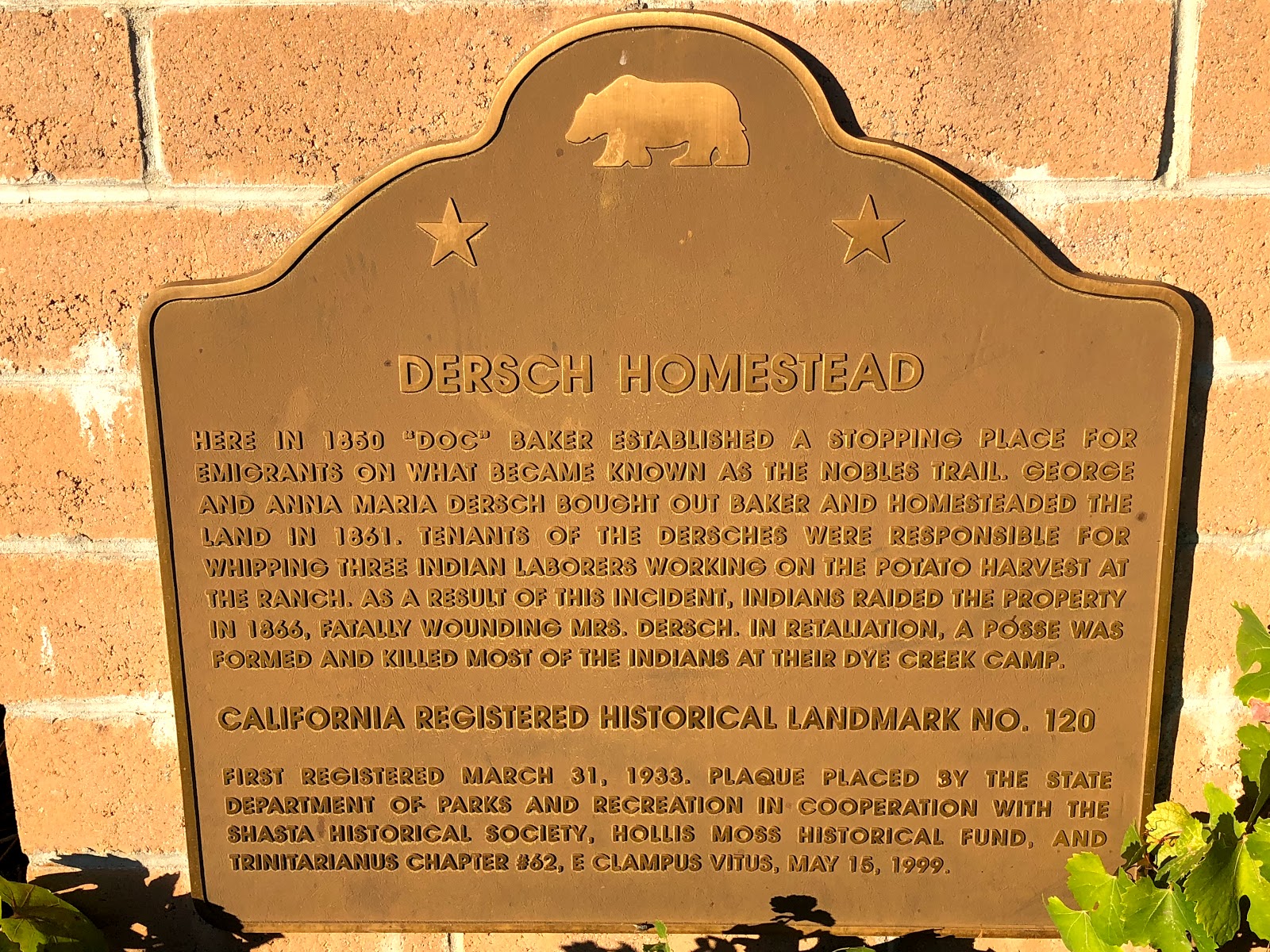
The Dersch Homestead became California Historical Landmark Number 120 when it was designated on March 31, 1933. The Dersch house was destroyed by fire in 1934 and it was rebuilt that same year. The only remaining structure on the Dersch Homestead is the barn. A historic plaque was placed at the Dersch Homestead by the State Department of Parks and Recreation, Shasta Historical Society, Hollis Moss Fund, and the Trinitarianus Chapter #62, E Clampus Vitus on May 15, 1999.


Above: this house was built in 1934 after the original Dersch home was destroyed by fire. This photograph was taken by Jeremy Tuggle on October 10, 2018


Above:  this plaque was placed at the Dersch Homestead by the State Department of Parks and Recreation, Shasta Historical Society, Hollis Moss Fund, and the Trinitarianus Chapter #62, E Clampus Vitus on May 15, 1999. This photograph was taken by Jeremy Tuggle on October 10, 2018


.
Above: a portion of the historic Dersch homestead. A barn in the background. This photograph was taken by Jeremy Tuggle on October 10, 2018


Above: Bear Creek runs near the property, an older bridge which is out of service appears over the creek. This photograph was taken by Jeremy Tuggle on October 10, 2018.


Above, L-R: the headstones of George F. Dersch and his wife Anna Maria (Kemmelmier) Dersch. They are interred into the historic Parkville Pioneer Cemetery, located on Parkville Road. Note: there are two headstones for Anna. One of them spells her given name as "Annie". The writing etched into her headstone's give her name, death date, and the following sentence, "Wife of George Dersch, was killed by Indians on Bear Creek." She was also a native of Bavaria. This photograph was taken by Jeremy Tuggle on October 10, 2018.


Above: the headstone of George F. Dersch, husband of Anna Maria (Kemmelmier) Dersch. He was born on March 28, 1832. He was interred into the Parkville Pioneer Cemetery. This photograph was taken by Jeremy Tuggle on October 10, 2018.


Above: "Anna Maria (Kemmelmier) Dersch" headstone number one. The is the closest headstone to the grave of George F. Dersch. She was interred into the Parkville Pioneer Cemetery. This photograph was taken by Jeremy Tuggle on October 10, 2018.


Above: "Annie Maria (Kemmelmier) Dersch" headstone number two. This is the farthest lot from the headstone of George F. Dersch. She was interred at the Parkville Pioneer Cemetery. It's not known why there are two headstone's in her memory. This photograph was taken by Jeremy Tuggle on October 10, 2018.


Above: the road to the left is Dersch Road which takes travelers past the historic Dersch homestead. It is named in honor for the Dersch family. This is the stopping point for Parkville Road at Dersch Road. This photograph was taken by Jeremy Tuggle on October 10, 2018.


RESOURCES:

1850 U.S. Census

1852 California State Census

1860 U.S. Census

Solomon D. Baker, Declaration of Homestead dated March 27, 1862

Coroner’s Inquest Report – Mrs. William Allen dated September 10, 1864

Coroner’s Inquest Report - Helenor M. Jones dated September 21, 1864

Horrible Massacre By Indians - The Shasta Courier newspaper of Shasta, September 10, 1864

Another Indian Murder - The Shasta Courier newspaper of Shasta, September 17, 1864

Our Indian Difficulties - The Shasta Courier newspaper of Shasta, September 17, 1864

Volunteers -  The Shasta Courier newspaper of Shasta, September 24, 1864

More Indians Killed - The Shasta Courier newspaper of Shasta, October 8, 1864

Indian Raid - The Shasta Courier newspaper of Shasta, August 25, 1866

Correspondence - The Red Bluff Independent newspaper of Red Bluff, August 29, 1866

Indians Overtaken and Killed - The Shasta Courier newspaper of Shasta, September 1, 1866

Death of Mrs. Dersch - The Shasta Courier newspaper of Shasta, September 1, 1866

The Settler’s Vengeance - The Red Bluff Independent newspaper of Red Bluff, September 5, 1866

1867 California Voters Registration

1870 U.S. Census

1880 U.S. Census

BP-005.1 Baker, Solomon Dodge Pioneer Plaque File on file at Shasta Historical Society

The Good Old Times In McClean County, Illinois written by Dr. E. Duis. Published by Bloomington. ©1874 pages 206-207.

DP-009 Dersch, George Pioneer Plaque File on file at Shasta Historical Society.

Our Storied Landmarks – Shasta County, California, written by May H. Southern, published by Balakshin Printing Company, ©1942.

Shasta Historical Society Pioneer Record - George Dersch, dated: March 23, 1943

Shasta County, California A History by Rosena Giles, published by Biobooks, ©1949.

Our Pioneers - The Dersches by Beverly Steele, Ridge Rider News newspaper of Shingletown, January 4, 1993

Our Pioneers - The Dersches Part II by Beverly Steele, Ridge Rider News newspaper of Shingletown, January 11, 1993

Our Pioneers - The Dersches Part III by Beverly  Steele, Ridge Rider News newspaper of Shingletown (no date)

Wintu Trails by Helen Steadman Hogue. Published by Shasta Historical Society ©1977. Printed by Redding Printing Company Inc.,


Thursday, July 5, 2018

Shasta's Growth, Prosperity and Decline, Part Two.


Pictured above is the (Old) Stage Road which was completed in April of 1851 taking travelers to and from Shasta. There is a historic marker nearby. This photograph was taken by Jeremy Tuggle on April 29, 2016.


Then in, April of 1851 the first stage road in Shasta County was completed giving travelers a lot smoother ride to and from Shasta. (A section of this old stage road still exists at the junction of Swasey Drive and Red Bluff Road near Shasta.) It brought many newcomers to the area and additional commercial trade. Many people used this road from the nearby rural communities to transact business in Shasta.

Three months later on July 10, 1851 a post office was established by the United States Postal Service headquarters in Washington D.C., with Robert W. Crenshaw appointed as the first postmaster. Then on, March 13, 1852, a newspaper called the Shasta Courier was founded in Shasta by Archibald Skillman, Jacob C. Hinckley and Samuel H. Dosh. This newspaper was a weekly newspaper which was printed every Saturday. During that year, a fire department was organized.

Shasta’s first fire occurred on the morning of November 28, 1852 at 3 a.m., the fire started in the Arcade Saloon and it totaled to $111,520. Eventually, Shasta was rebuilt. A second fire destroyed Shasta again on the night of June 14, 1853. The fire ignited at 5 p.m., inside the Parker House (a hotel) on Main Street, Shasta’s entire business district burned down in thirty-three minutes. The results were catastrophic, and the above fire was the greatest loss by fire to date in Shasta.

By October of that year, local residents were busy improving their city as new homes and businesses were rebuilt again. A school was organized in Shasta by a teacher named Benoni Whitten in 1853 with sixteen students in attendance. It was a public school and not a private school. In addition to that year, an entrepreneur by the name of B. Jacobson erected the first fire-proof brick building on the south side of Main Street. Jacobson’s store was called B. Jacobson & Company.

That year also witnessed the establishment of a Chinatown called Hong Kong in Shasta by the Chinese at the southern end of Main Street near Middle Creek Road. Each of the Chinese lived in their own huts made of wood and cloth. The majority of them were miners. Hong Kong was a thriving place that included several stores including a gambling saloon, a hotel, and a joss house. In December of 1853, Hong Kong had a population of 500 Chinese immigrants. The white settlers discriminated against the Chinese settlers, and anti-Chinese meetings were held within Shasta. They were unwelcomed in the area. The anti-Chinese meetings were held on a regular basis but in February of 1859, the Chinese were ordered by the white settlers to evacuate their Chinatown by March 1, 1859. Some moved on to other Chinese settlements in Shasta County and Hong Kong fell to vandalism.

In 1854 the first Shasta County Courthouse was built. The building was a two-story log style structure, which was located on High Street near Boell Alley. Shasta County paid $5,280 for this building and it served as the courthouse until 1861. In June of 1854, Doctor Benjamin B. Shurtleff erected a fire-proof brick building on Main Street for the purpose of operating his own pharmacy, this became the first pharmacy in Shasta and his pharmacy shared the building with the Goldstone & Company General Merchandise store.

In April of 1857, a new luxurious three-story fire-proof brick hotel called the Empire was completed at a cost of $30,000, on Main Street at Shasta. The first Empire hotel was destroyed by fire in 1853. The new building was paid in full by its owners Donalson & Company which also included a Mr. Chapman. They advertised as having the following: private rooms with large and commodious rooms which were provided for the accommodations of private families, a dining room, a bar with the best stocked liquors and cigars. In addition to the hotel there were also a corral and stable attached to the building.

The Empire hotel passed through many owners since Donalson & Company owned this first-class hostelry. The brand-new Empire hotel became the leading hotel at Shasta, and the Empire stayed in business under different owners until 1923, when a new owner of the hotel dismantled the hotel to relocate to Redding and built a newer hotel there. The Charter Oak hotel stayed in operation until 1915, when it was dismantled by its owners.

Then in 1861 the Shasta County Courthouse on High Street was converted into a modern schoolhouse. However, a building on Main Street was purchased by the county from James T. Loag for $25,000. The building was remodeled that year to include a courthouse and a jail. It stayed actively in use until May of 1888. (This building is presently the Shasta Courthouse Museum in Shasta.)

As Shasta prospered well into the 1870s with new businesses, and newcomers making Shasta their home, a new town called Redding was established at a place called Poverty Flats by the California and Oregon Railroad a division of the Central Pacific Railroad in 1872. With Redding coming into fruition, Shasta would soon start to decline due to the railroad bypassing Shasta, even though Shasta still had control of the county seat. As the end-of-the-line Redding was very fortuitous in its role in the development of our county for ten years until the railroad resumed construction and laid its tracks north of Redding through the Sacramento River Canyon.

Redding became incorporated as a city on October 4, 1887 and during the following year Redding battled Shasta and Millville at the local election primary to become the county seat. Redding won the county seat during that county wide vote. Shasta served as the county seat from March 6, 1851 to May 19, 1888, a total of thirty-seven years. On May 19, 1888 the first court was held in Redding inside the brand new Shasta County Courthouse on Court Street.

As Redding grew, Shasta’s population waned as local residents moved from Shasta to Redding, and at the turn of the 19th century, Shasta was becoming nothing more than a ghost town, falling to blight and vandalism. An effort to restore Shasta’s historic district began in the 1930s and from this effort came the creation of the Shasta State Historic Park which was dedicated in 1950. Today, (Old) Shasta remains a busy town with a population of 1,771 people.


A postcard of Callaghan Block at Shasta on Main Street, circa 1855. L-R: the Shasta Book Store, proprietor Anton Roman, City Drug Store, proprietor C. Roethe, and J. & D. Callaghan. This building was owned by the Callaghan siblings, Jeremiah Callaghan, Daniel Callaghan and a third brother whose name eludes me. This store was later owned by Jeremiah Callaghan & Company which included my maternal great-great-great-great-great grandfather, Walter William Scott (1807-1878), a forty-niner of Shasta County who formerly ran their pack trains and freighted in the merchandise from Sacramento to Shasta for the Callaghan brothers. He was also their store clerk. At later date, the name of the store became Scott & Callaghan. From the collection of Jeremy M. Tuggle.


The present site of Callaghan Block on Main Street in Shasta A marker was placed by the Shasta State Historic Park marking the site. This photograph was taken by Jeremy Tuggle on June 23, 2018.


A view of Main Street, Shasta. Shasta State Historic Park and Museum at the former Shasta County Courthouse. This photograph was taken by Jeremy Tuggle on June 23, 2018.


Bull, Baker & Company along Main Street at Shasta. This photograph was taken by Jeremy Tuggle on June 23, 2018.


Additional ruins along Main Street at Shasta. This photograph was taken by Jeremy Tuggle on June 23, 2018.


This plaque notes some of Shasta's history on it. Shasta is a registered California State Landamark. It was dedicated on June 12, 1950. This photograph was taken by Jeremy Tuggle on June 23, 2018.


RESOURCES:

A Jail And A Courthouse - The Shasta Courier newspaper pf Shasta, November 19, 1853

Hong Kong - The Shasta Courier newspaper of Shasta, December 3, 1853

Empire Hotel - The Republican newspaper of Shasta, January 31, 1857

Empire Hotel - The Republican newspaper of Shasta, April 4, 1857 

Our Storied Landmarks – Shasta County, California, written by May H. Southern, published by Balakshin Printing Company, ©1942.

Shasta County, California A History by Rosena Giles, published by Biobooks, ©1949.

In the Shadow of the Mountain A Short History of Shasta County, California, by Edward Petersen ©1965

Place Names of Shasta County by Gertrude Steger, published by La Siesta Press, ©1966.

Shasta: The Queen City by Mabel Moores Frisbie and Jean Moores Beauchamp, published by California Historical Society, ©1973.

Shasta State Historic Park Brief History and Tour Guide, published by Shasta State Historic Park, ©July 1985

Did Arsonists Raze and Re-Raze Shasta? by Jeremy M. Tuggle, the Record Searchlight newspaper, July 25, 2016