Showing posts with label Joaquin Miller. Show all posts

Monday, August 18, 2025

PIECES OF HISTORY FROM THE EMPIRE HOTEL AT SHASTA.


Filmed on location.


Come see some unique pieces of history on display at the former Shasta County Courthouse and Museum in (Old) Shasta at what is now the Shasta State Historic Park. These items belonged to the luxurious, commodious, and comfortable, Empire hotel, a three-story brick hostelry, which stood towering above Main Street at Shasta, it offered lodging and meals to the weary travelers passing through the area. This hotel was erected in that town for $30,000 in 1857. It went through many changes of ownership during the years.
This hostelry operated well into the turn of the 20th century, and it was closed down in 1913, later on, it fell into decay and ruins like most of the former buildings of (Old) Shasta did. The Empire hotel was demolished in January of 1923. Its last owner was Sarah J. Hill, a resident of Redding, California. The Empire hotel boasted of the following famous guests lodging here during its prime which included California Governors Standford, Haight and Bigler. Along with Joaquin Miller, the famous Poet of the Sierra's. The lot in Shasta which the former hostelry stood upon has been turned into a park on the left side of the present-day, Shasta County Courthouse and Museum building.
On my maternal side my great-great-great grandparents, Valentine Doll, and his wife, Harriett (Schmidt) Doll stayed here. They were residents settling upon Huling Creek near Eagle Creek (now Ono, California). At one time Valentine Doll operated the local meat market in (Old) Shasta. He was also a local farmer and a miner in the area. On my paternal side my great-great-great-great grandparents George McFarlin, and his wife, Martha (Miller) McFarlin along with their kids, their kids at this time who were actually young adults their youngest being 17 years old, when they stayed here as well. George McFarlin was a local farmer, and this family also resided at Eagle Creek (now Ono). Please like, share, comment and subscribe to my YouTube channel if you haven't yet. Look out for the next episode, article, or blog on my website: Exploring Shasta County History as well.


RESOURCES:

Administrators Sale of Real Estate - The Shasta Courier newspaper of Shasta, March 12, 1853

Terrible Conflagration!! - The Shasta Courier newspaper of Shasta, June 18, 1853

Dissolution - The Shasta Courier newspaper of Shasta, August 13, 1853

The Empire Property for Sale - The Shasta Courier newspaper of Shasta, October 10, 1853

Empire Hotel - The Shasta Republican newspaper of Shasta, January 31, 1857

Empire Hotel - The Shasta Republican newspaper of Shasta, April 4, 1857

The Shasta Courier newspaper of Shasta, January 2, 1858

The Empire Bar - The Shasta Courier newspaper of Shasta, January 30, 1858

Travel - The Shasta Courier newspaper of Shasta, October 30, 1858


Oregon & California Stage Office - The Shasta Courier newspaper of Shasta, July 20, 1872

Anniversary Ball - The Shasta Courier newspaper of Shasta, December 20, 1873

Among Our Citizens - The Shasta Courier newspaper of Shasta, August 24, 1895.

John V. Scott - The Shasta Courier newspaper of Shasta, June 17, 1899

The Searchlight newspaper of Redding, May 4, 1900

Shasta Hotel Man Now in Bankrupt - The Redding Record Searchlight newspaper of Redding,

The Empire at Shasta - The Redding Record Searchlight newspaper of Redding, May 7, 1900

For Sale - The Record Searchlight newspaper of Redding, June 21, 1901

The Daily Free Press newspaper of Redding, January 30, 1903

John V. Scott Has Gone to Long Rest - The Free Press newspaper of Redding, December 28, 1904

Old Landmarks to Go - The Sacramento Bee newspaper of Sacramento, January 16, 1923

Two Landmarks Are to Be Town Down - The Searchlight newspaper of Redding, January 19, 1923

Mrs. John V. Scott Pioneer Shastain Is Called Beyond - The Courier-Free Press newspaper of Redding, July 3, 1924

The Shasta Courier newspaper of Shasta, March 13, 1952

Shasta: The Queen City by Mabel Moores Frisbie and Jean Moores Beauchamp, published by California Historical Society, ©1973.

Shasta State Historic Park Brief History and Tour Guide, published by Shasta State Historic Park, ©July 1985

John Varner Scott: The Shasta Hostelry Man written by Jeremy M. Tuggle, published on March 20, 2019.

Friday, May 31, 2019

Gold Fever: A Tale of the Lost Cabin Mine

The Lost Cabin mine is a fabled gold mine which was located by prospectors Cox, Benedict and Compton during the year 1850, however, the first quartz mines in Shasta County were not dug out and located until 1852, everything up-until-then (in this county) were placer mines. While the three miners were prospecting in the Sacramento River Canyon (where it is believed to have been located) a grizzly bear met them face-to-face. The miners shot and killed the animal which fell into a natural shaft about several feet in diameter. One of the men jumped into this depression in the ground to cut the meat from the grizzly bear for food.

While he was carving out the meat from the grizzly bear, he noticed a gold nugget in the shaft and he stopped cutting meat to continue to prospect this natural hole while he moved the large creature around to give him room to make the search. He found additional free gold, and he stopped collecting the nuggets. The three men discussed what to do next and they decided to cut the trees in the area to erect two cabins. Eventually, the two cabins were erected by Cox, Benedict and Compton at the site. They also found a way to lift the body of the grizzly bear out of the hole to clear it out.

Cox, Benedict and Compton, stayed in the area for sometime they had axes with them which helped them build their cabins and blaze a trail to their discovery site. However, within time the fear of the heavy winter months ahead forced them to abandoned this claim. Legend has it that the three men departed the area with $40,000 each. in free gold, a grand total of $120,000. They reached a trading post near Whiskeytown, and showed the people at the trading post their findings which made their story factual and in time legendary. The three men never returned to Shasta County, and the secret of its location went with them until they died.

Then in 1853, John W. Hillman led a party of prospectors into the Sacramento River Canyon in the upper end of the canyon in hopes to locate the fabled Lost Cabin mine, this was before he discovered Crater Lake in Oregon. Their search yielded no results. The men were hoping to find the cabins of the former miners still standing in a non-populated place. Once they found no trace of this fabled site they decided to move north into the Oregon territory.  

During 1855, a new rush of miners seeked-out the area of Lower Soda Springs which was the home to Castle Crags. The tale of the Lost Cabin mine was retold by an early pioneer settler of the area named Joe De Blondy alias Mountain Joe who kept a trading post in the area. Mountain Joe had befriended another pioneer in the area by the name Cincinnatis H. Miller alias Joaquin Miller the famed Poet of the Sierra's who also talked about the fabled mine. Mountain Joe thought it would bring him additional business to his trading post, and his business flourished because of it. As more European-American's and other emigrants entered Shasta County the tale became widespread. Thousands of men dotted the creeks and bars on the Sacramento River in search of the fabled mine.


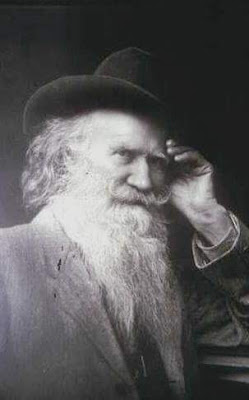
Pictured above: Cincinnatis H. Miller alias Joaquin Miller the famed Poet of the Sierra's. Courtesy of Shasta Historical Society.

Miners began filling the nearby creeks and the Sacramento River with mud from their mining activities which killed the salmon run in these channels. They also began to hunt the wild game in the area which left no food for the Modoc Indians. The Modoc Indians began attacking travelers using the Oregon Trail in response to the European-Americans which forced the closure of that famous route in Shasta County. It was a major set back for the region as supplies and the local mail couldn’t reach various areas. After that, a raid was made upon Mountain Joe’s trading post and many supplies were stolen by them including sacks of flour. Some of these flour sacks accidentally tore open upon their return home. This allowed the European-Americans to find them easier as it marked a trail for them, in June of 1855, a war broke out called Battle Rock. Battle Rock was a deadly clash between the Modoc Indians in the area and the gold miners who were in search of the Lost Cabin mine due to the above events.

Captain George R. Crook led his military troops up Castle Crags to fight the Modoc Indians but they ended up losing the fight. The next attack was led by pioneer Reuben Gibson whose wife was was a daughter of Chief Weilputas, Chief of the Shasta Indians. The Shasta Indians were enemies of the Modoc Indian tribe. The Chief loaned his Indian warriors to Gibson. This group also contained Shasta County Sheriff John Driebelbis, Mountain Joe, Joaquin Miller, and additional gold miners to assist them in their fight. It was in this battle that Joaquin Miller was injured. Gibson’s group won the battle. Battle Rock was also documented as being the last battle in which local Indians used bows and arrows.

As for the Lost Cabin mine, it has never been found in Shasta County, yet, their have been many claims over the years in other areas of California printed by various media outlets which claim that miners have found the legendary Lost Cabin mine. There is a version of the story printed by the San Francisco Gate which places the fabled gold mine in Trinity County. However, these are the Shasta related events that are known. It still attracts a lot of attention today. Battle Rock is now a California historical landmark.


The plaque states, “Battle Rock - Battle of the Crags was fought below Battle Rock in June 1855. This conflict between the Modoc Indians and the settlers resulted from miners destroying the native fishing waters in the Lower Soda Springs area. Settlers led by Squire Reuben Gibson and Mountain Joe Doblondy, with local Indians led by their Chief Weilputus, engaged Modocs, killed their Chief Dorcas Della, and dispersed them. Poet Joaquin Miller and other settlers were wounded.”  California Registered Historical Landmark No. 116 Plaque placed by the State Department of Parks and Recreation in cooperation with the Ancient and Honorable Order of E Clampus Vitus, Trinitarianus Chapter #62, July 26, 1984. Photograph taken by Jeremy Tuggle on May 31, 2019.


RESOURCES:


STORY OF SHASTA'S LOST CABIN MINE IS AN INTERESTING ONE - By May Southern - The Courier-Free Press newspaper of Redding, July 18, 1930


The Legend of the Lost Cabin Mine, 1948 by Robert O’Brien - San Francisco Gate, June 17, 2012


Shasta County, California A History by Rosena Giles, published by Biobooks, ©1949, pages 37-38.


The Covered Wagon 1967, published by Shasta Historical Society